All posts tagged nutrition

A Food Forest!

One of life’s simple pleasures has to be walking slowly through a beautiful forest, smelling the fresh air and greenery all around.  So just image how amazing the experience could be in a forest full of food!  This innovative project in the Beacon Hill neighborhood of Seattle, WA will create the nation’s first forest of edibles: seven acres of walnut and chestnut trees; blueberry and raspberry bushes; fruit trees, including apples and pears; exotics like pineapple, yuzu citrus, guava, persimmons, honeyberries, and lingonberries; herbs; and more.

Following the principle of permaculture, the plot will be carefully created in such a way that the soil, insects, and selection and location of plants will work in harmony with each other so that the land will be self-sustaining, similar to a natural forest.

Just imagine the possibilities for education if every city in our country had a food forest.  What a beautiful (and delicious) way to reconnect with real food and our planet.

The best part of this innovative project?  All fruit will be free and available for public plucking!

Like this post?

Image by sapienssolutions

Join the Global “Eat-In” Happening Today!

162 million Americans have a chronic disease that stems from poor diet and lifestyle choices and 1.5 billion people are now overweight.  Raising just one pound of beef requires 2000 gallons of water and produces 58 times more greenhouse gases than one pound of potatoes.  As surprising as it may seem, what you put on your fork is more impactful to your personal health and the health of the environment than the car you drive.

Imagine the impact we could have on human and planet health if we all chose to purchase only fresh, whole, sustainably-raised, mostly plant-based food.  And imagine if we cooked and ate all the meals made with that beautiful food at home with friends and loved-ones.

Today is Global “Eat-In” Day.  It’s a day to cook and eat real food with family and friends at home for just one day.  Initiated by Dr. Mark Hyman, today is a great opportunity to test how it feels to be mindful about what we eat and take just a little more care with our food choices.

Here’s my meal plan for the day with my family:

Breakfast: Scramble made with homemade tortillas and farmer’s market eggs.  Smoothie made with organic plain yogurt, banana, kale and blueberries.

Snacks: Raw mix of walnuts and almonds.  Fresh berries.

Lunch: Tacos made with homemade tortillas and beans, lettuce, green onions, guacamole and organic plain yogurt

Dinner: Wild salmon tossed with romaine, chopped apples, sunflower seeds and a tahini-based dressing

I hope you’ll join me.  Cheers to the future health of people and planet!

Thank you Civil Eats for the statistics I used at the beginning of this post.

Like this post?

Image by Chris Fritz

Hi, I’m a Qualitarian. Nice to Meet You.

Perhaps the first diet labels stemmed from religion…kosher, for example.  But our evolution in labeling our approach to diet has evolved tremendously, especially in recent years.  Vegan and vegetarian, then lacto-ovo vegetarian (avoids animal products except dairy and eggs), pescetarian (avoids animal products except seafood), flexitarian (eats mostly vegetarian but not always) and now qualitarian.  I feel like all these labels are ripe for a magazine quiz, “Find out Your Diet Type”, right next to a quiz, “Are You Dating the Right Man?”

In all seriousness, I do believe these labels serve a valuable purpose.  They succinctly describe to others what you’re open to eating and they may help the individual using the label to put some structure around their eating goals.

I admit, I like to label myself when it comes to eating and have tested out a variety of labels, lacto-ovo vegetarian, flexitarian and I find myself at times idolizing the vegan label.  However, none of these have ever fit that well.  My guardrails around what I eat are based in how the food is grown, raised, sourced and processed.  I want my tomatoes to be in season and organic, my beef to be pasture raised and grass fed and my coffee to be ethically sourced.  So, imagine my excitement when I came across a new label, qualitarian, in an article by registered dietician, Ashley Koff.  Why, yes!  That’s me!

Qualitarian defined by Koff,

It means, first and foremost, that you choose to be the gatekeeper for what goes into your body. That you don’t feel deprived but rather empowered when you turn down a veggie burger with genetically engineered ingredients or hexane and enjoy one made from organic quinoa and mushrooms or a wild salmon burger or a grass-fed burger. It also means saying no to a ready-to-eat salad of chemically sprayed lettuces in favor of cooking your own organic broccoli (great to start with frozen too). And it means taking pride in being smarter than the front of a package or a commercial. Yes, you are smarter than both of those; yes, you are. You are smarter than the package that tells you what it wants you to know but doesn’t tell you the rest of the story.

As a natural food and health expert, I want to believe these labels are also a symbol for an awakening within our culture.  That flexitarians are not cutting back on meat consumption simply to lower their cholesterol, but because they understand the link between meat production practices and global warming.  That vegetarians are using the label as a way to increase consumption of fresh produce and decrease consumption of processed foods.

So, whatever you may be, a vegan or even an omnivore contemplating a trial as a pescetarian, I invite you test out a diet label.  Chances are, wherever you land it will provide an opportunity for you and those around you to question what you believe about food and be more thoughtful about the decisions you make.

Like this post?

Image by Laissez Fare

How to Make a Super Smoothie

I really love smoothies.  Not only do they taste great, but they are a fabulous way to pack in serious nutrition.  I regularly prescribed medical smoothies for my cancer patients while in private practice to minimize side-effects from chemotherapy and radiation and I personally used smoothies before and during both of my pregnancies to get my body ready and to make sure I was providing all the extra nutrients I needed to grow beautiful healthy babies.

My basic smoothie recipe is the following:

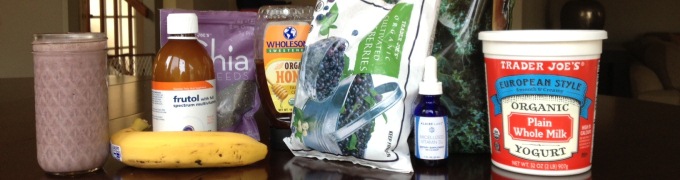
  • ½ banana
  • 1 cup whole fat, plain yogurt
  • 1 cup frozen blueberries
  • Water to desired consistency

Smoothie text pic

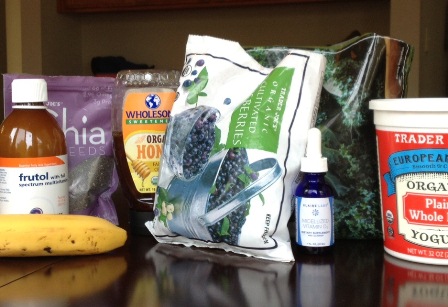
Other things I often add:

  • Frozen kale – you can either buy kale this way or cook, puree and drop into ice cube trays to use as you need them
  • Chia seeds
  • Fair trade honey or agave syrup
  • Liquid fish oil – I like Frutol by Pharmax LLC
  • Vitamin D drops
  • Powdered supplements such as multivitamins or liver support herbs – for both I use a brand called Karuna

If you’re not big on pills, smoothies can be a great way to deliver your medicine as it’s easy to mask the flavor. They are also great to have for breakfast.  I’ll often get my ingredients ready the night before and store in the fridge, then blend right before I leave so I can drink it on my way into the office.  A smoothie plus a hard-boiled egg or a slice of whole grain toast with nut butter spread is a complete breakfast full of all the things you need to give you energy and brain power!

If you’re vegan or just avoiding dairy, try using ½ an avocado instead of yogurt.  Avocados provide a nice creamy texture and are loaded with healthy fat (Please don’t be scared of fat.  It’s a good thing!).  Also, it’s important that all the ingredients (especially the dairy) be organic certified or sourced from a farm that avoided conventional pesticide practices.  Obviously, any fruit/veg is better than none at all, but clean versions are even better.

Starting my day off with a smoothie really makes a big difference in how I feel overall at the end of the day.  I know no matter what, I’ve given my body a great boost of fiber, antioxidants, dark green veggies and specific nutrients from my dietary supplements.

Like this post?

Is it Okay to Add Aspartame to Milk? Let’s All Hope Not!

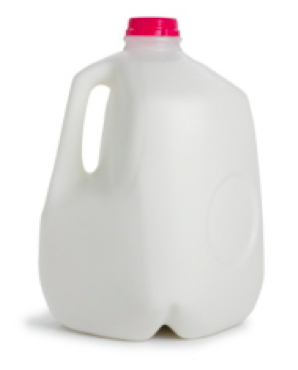
Screen Shot 2013-03-05 at 1.23.17 PMI was sad to see news last week that the milk industry has petitioned the FDA to approve the use of aspartame, an artificial, chemically-created sweetener also known as NutraSweet and Equal, as a way to create a lower-calorie milk. You can find the article here.

The natural products industry is under tremendous pressure to innovate and create new products, and the milk industry is by no means immune. Another likely factor at play in this news is our society’s continued desire for products that provide it all – great flavor, great nutrition, zero calories and, of course, cheap. An artificially-sweetened, low-calorie milk is such a great example of how just because something can technically be done it doesn’t necessarily mean it’s the right thing to do.

Milk is an American symbol of what is good and wholesome in our diets. As a mother, I’ve been told repeatedly to give milk to my children (not just for the calcium but also as a liquid-dense source of calories). It is an excellent addition to the diet for many of us due to the protein, calcium and vitamin D it provides. If you’re open to drinking raw milk, the benefits multiply exponentially.

It’s because milk is so wholesome and because so many of us rely on milk to keep ourselves and our families healthy, that adding an artificial sweetener to it is especially troubling. Like all natural things, milk was beautifully created with just the right amount of calories and sugar (lactose). If we need a low calorie drink, let’s all turn to a nice big glass of pure water and save our milk for a nicely (and naturally) packaged snack.

Like this post?

Image by ShardsOfBlue