All posts tagged nutrition

Weight Loss: The “Eat Your Dinner for Breakfast” Diet

For many years, I operated a private practice as a naturopathic doctor in Southern California, specializing in the treatment of digestive diseases and side-effects of cancer treatment.  Although weight loss support was never a service that I proactively marketed, it was an all too common issue that I found myself needing to address with my patient population.  Really, this wasn’t a surprise to me, given that close to 70% of all adults in this country are overweight or obese.  Every doctor, no matter their specialization, can likely relate to my experience – given the epidemic of overweight and obesity in our country, the need to treat these diseases is fundamental to successfully addressing the vast majority of other symptoms and illnesses plaguing our society today.

The weight loss protocol that I created was conceptually quite simple and consisted of two basic recommendations:

  1. Decrease reliance on packaged and fast foods and increase consumption of whole foods
  2. Make breakfast the biggest meal of the day, lunch the next largest and dinner the smallest

I consciously avoided complicated rules and trends such as those found in diets like The Zone or Atkins Diet.  My goal was to create a mental shift in my patients from seeing a diet as a temporary thing to do to lose weight to a life-long way of approaching food in a healthy manner.  Personally, I don’t have the time or interest to count calories, weigh my meals or eat the same frozen dinners over and over.  Perhaps it was my own irritation with these trendy plans that played the biggest role in the advice I ultimately shared with patients.

To get started, I would often suggest a patient make one simple change: eat their dinner for breakfast and their breakfast for dinner.  So, if they typically ate a chicken breast, green salad and slice of bread with butter for dinner and a bowl of cereal for breakfast, they’d just switch them up, simple as that.  Although the idea of eating chicken breast and salad for breakfast was often a bit of a mental struggle, it was about as easy a change as you could make…no modifications to your grocery shopping list, no new recipes, no calorie counting.

More times than not, when I would see them at their next appointment, they had lost weight…amazing but true.  With the idea planted (and some nice weight loss results as motivator), I would then work with them to find more suitable meal ideas grounded in whole food ingredients that followed the same approach of eating the largest meal at breakfast and the smallest meal at dinner.

Last week when I came across a study recently published in the journal Obesity that followed this same approach I was incredibly excited.  I was even more excited when I read the results of the study that found significant weight loss as well as other improvements in fasting glucose, insulin and triglyceride levels in the treatment group.  How wonderful it was to see this approach studied and to see it demonstrate such positive and measurable results.

I have often joked that I discovered the next diet fad and have even come up with a few potential names, “The Dinner-Fast Diet”, “Eat Steak but Only at Breakfast Diet” or maybe, “The Upside Down Diet”.  Too bad I don’t have a publishing deal…it seems like I really may be on to something!

Like this post?

Image by Hello Turkey Toe

Your Seasonal Guide to Food as Medicine: August Produce

August is arguably the pinnacle of summer.  If you have a vegetable garden, things are shooting and crawling all over the place.  If you outsource your farming (as I am very thankful to do) farmers markets are like an exploration in paradise.  When everything is at its peak, just enjoying the pure flavor of a fruit or vegetable alone and in the raw can be divine.

As a naturopathic doctor, I’m always looking at food as medicine.  It turns out many of the colors that make plants so beautiful and many of the compounds that make them so flavorful are also powerful medicines for everything from cardiovascular support to cancer prevention.  For the past few months, I’ve been creating a seasonal guide to fruits and vegetables through the lens of food as medicine.  If you’d like to start at the beginning, you can find my first post here.

Sweet Basil – This delicate green leaf has a distinct flavor and is a staple spice in cuisine from Thailand, India and Turkey.  Research to investigate health promoting compounds and activity is broad for this plant and although not yet well established, basil does show some anti-viral and anti-bacterial activity.  Perhaps most interestingly, sweet basil is traditionally used in by some communities in India as a toothbrush by folding the leaves and rubbing them against the teeth…I suppose if you ever find yourself in a pinch without a toothbrush you can pick up some basil as a substitute!

Mangoes – This fruit is the official fruit of my family.  My husband spent a few years as a child living in Kenya, and along with a long list of other things, brought his deep affection for mangoes home with him.  From a nutrition standpoint, one cup of chopped mango provides an excellent source of vitamins C, beta-carotene (vitamin A) and folate.  From a medicine perspective, the bulk of the research to date is focused on the seed.  Although typically not considered a food, fiber from the mango seed may provide benefit for weight loss.

Eggplant – A beautiful vegetable (which is actually a fruit), eggplant provides a nutritional punch with fiber, magnesium and a range of other vitamins and minerals.  In addition to the nutritional nutrition profile, eggplant contains chlorogenic acid that may help to promote healthy cholesterol levels.

Tomatoes – This post could easily have been dedicated only to tomatoes.  The body of research on lycopene, a carotenoid compound found in tomatoes with antioxidant and anti-proliferative (slows tumor growth) properties, blows all the plants from in this month out of the water.  Most famously, lycopene has been researched for its ability to slow benign prostatic hyperplasia and prostate cancer growth.  However, it is also showing promise for a long list of other conditions as well: asthma, atherosclerosis, breast cancer prevention and diabetes type II (just to name a few!).  Another interesting tip about tomatoes and lycopene, is that in contrast to most active compounds founds in plant, lycopene becomes more potent and bioavailable the more it is processed.  So, although you should absolutely bite into a fresh beautiful heirloom this month, a generous squirt of organic ketchup on your next veggie burger isn’t a bad idea either.

Like this post?

Image by See-ming Lee

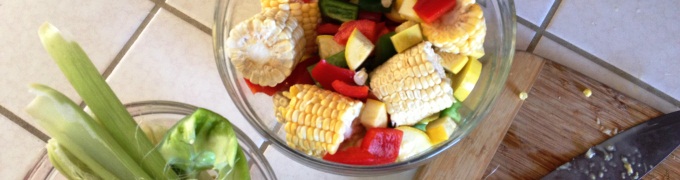
Roasted Summer Vegetable Salad with Fresh Lemon Dressing

My mother happens to be a fabulous vegan cook, and while I was visiting recently she taught me the following recipe.  I’m so in love with it at the moment that I’m compelled to share it here.

For all my nutrition and health expertise I rarely ever cook (I know, the irony!).  However, this entrée-sized salad is so simple and low-maintenance that even I can do it while juggling kids and my own hungry stomach at the end of the day.  If you’re really in a rush at dinner time, you can roast the vegetables in advance so all you have to do is whip up the dressing and add the mixed greens.  That’s dinner in five minutes, Folks!

From a nutrition and health perspective, we all know vegetables are an excellent source of fiber and all the colors in this salad mean lots of antioxidant and phytonutrient compounds to protect our cells from damage.  You may also be interested to note that vegetables, on average, have around 14% protein.  That means this entrée is not only delicious and beautiful but packed with nutrition.

Servings: 4

Ingredients for salad

4 bell peppers, assorted colors
3 summer squash or zucchini
2 ears of corn
10 Fresh basil leaves, torn (optional)
6 cups mixed greens
Olive oil
Salt and pepper

Ingredients for dressing

Juice from ½ fresh-squeezed lemon
1/3 cup olive oil
1-2 tsp Dijon mustard
Salt and pepper

Directions

  1. Preheat oven to 425 degrees
  2. Chop peppers and summer squash into bite size chunks and corn into  approx. 1” disks
  3. Add chopped veggies into a large bowl and toss with liberal olive oil.  Salt and pepper to taste.
  4. Pour onto rimmed baking sheet and bake for 30 minutes, stirring once at about the ½ way point
  5. Once veggies are done, set aside and cool to room temperature
  6. To make dressing; whisk all ingredients together and add salt and pepper to taste
  7. When you’re ready to serve the salad, divide the mixed greens into large bowls, top with the roasted veggies.  Drizzle over dressing and sprinkle on basil.

Like this post?

Your Seasonal Guide to Food as Medicine: July Produce

I’ve decided that Mother Nature must have a serious sweet tooth.  That’s my only explanation for the ridiculous amount of sweet, luscious fruits in season in July.  If you’re a seasonal veggie lover, I’m sorry to say this month may not be for you (perhaps you can re-live the months of April, May or June).  However, if on the other hand you are a fruit-lover, well then please read on as not a single vegetable has made my list this month, just sweet, beautiful fruit!

As a naturopathic doctor, I’m always thinking about food as medicine.  Here’s my sample guide to what’s in season this month and how each fruit and berry supports the body.

Apricots – A source of vitamin C, beta-carotene and fiber, these sometimes tart little fruits are a nicely packaged dose of antioxidant protection.  To get the most health promoting bang for the buck with apricots, choose fully ripened fruit, when anti-oxidant levels are at their highest.

Figs – Perhaps you’ve been told to eat prunes for fiber?  Well, figs are another, and if I may say so, more beautiful option.  Although they can be eaten year-round in a dried form, a freshly sliced fig makes a beautiful and unique addition to any seasonal fruit or green salad.  If you’re willing to experiment, try making a tea with the leaves of the fig plant.  A study conducted on diabetic subjects found improvement in glycemic (blood sugar) levels by drinking one cup of fig leaf tea a day.

Currants – A berry that has fallen off the map in recent years, this little fruit brings a lot to your bowl of morning oatmeal or smoothie.  With a high level of protein as compared to other berries, currants also have all the vitamins and minerals you’d hope to find – vitamin C, potassium and magnesium.  And don’t forget the added bonus that comes with that beautiful dark purple color; anthocyanins.  This family of compounds provides anti-oxidant protection and has been researched for a variety of benefits from cardio-vascular support to anti-cancer protection.

Peaches – I simply cannot get enough peaches at the moment!  The look and taste of this fruit is summer personified and the fact that peaches not only contain a healthy amount of traditional antioxidants and fiber but some of the more newly discovered anti-oxidant compounds makes eating them even more rewarding.  Compounds (anthocyanins, clorogenic acids, quercetin derivatives, and catechins) found in both the skin and flesh of this fruit have a range of benefits, one of which may be to promote a healthy insulin and inflammatory response in addition to providing cardio-vascular protection.

Watermelon – If you’re heard of the health benefits of lycopene from tomatoes, then you may be interested to know that watermelon is another top source for this compound which has been researched most famously for its ability to support the treatment of Benign Prostatic Hyperplasia (BPH) and prostate cancer.  Another interesting note about watermelon is that contrary to what you might expect, the densest concentration of nutrients, including lycopene, are found at the outer edges of this fruit, next to and including the white rind.

Like this post?

Image by vpickering

Your Seasonal Guide to Food as Medicine: June Produce

In the process of writing seasonal guides to food as medicine for the past few months, I’ve gained a whole new appreciation for the bounty of late spring and summer fruits and vegetables.  The colors!  The variety!  The sweet juicy fruits!  The fruits! (Fruit deserves a second call out).  I’m a bit worried that because I started this process in the spring, I’m in for a rude awakening when winter rolls around.  Starchy root vegetables seem so boring at the moment when compared to the vibrant colors I see at my farmers’ market visits these days.

With so much to choose from, this month required less in the way of searching for material and more in simply choosing which beautiful and powerful plants to highlight.   Here’s a sample of what’s in season in June and how each fruit and vegetable supports the body.

Poblano Peppers – In Central and South America, peppers, and in particular, Poblanos have been a traditional element of the diet for thousands of years.  They’ve long been recognized as a significant source of nutrients such as beta-carotene and other vitamins as well as chlorophyll.  Recent research is now investigating how these compounds may be working together to block mutations in the human body, providing an anti-cancer mechanism.

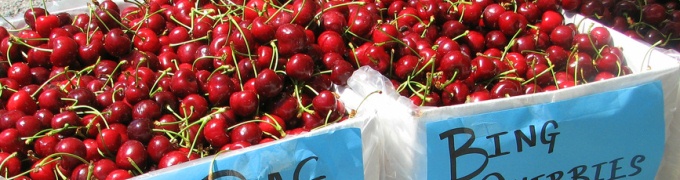
Cherries – One of the highlights from my time living in the Pacific Northwest was the arrival of Bing cherry season.  Although varieties of cherries can be found as far away as Africa, there’s something so amazing about the taste of a sweet, beautiful Bing cherry.  And cherries aren’t just about good taste and looks; research suggests they may have a surprising range of health benefits in the body.  From acting as a medicine for Benign Prostatic Hyperplasia to relieving exercise-induced muscle damage to containing a spectrum of anti-inflammatory and anti-cancer compounds, cherries bring serious medicine to your slice of cherry pie.

Blackberries – Along with traditionally recognized vitamins and antioxidants such as vitamin C and folic acid, blackberries provide anthocyanins, compounds that not only provide this berry’s beautifully rich color but additional antioxidant and astringent activity.  Compounds found in blackberries may help  tonify tissues and small vessels called capillaries, providing benefit for edematous conditions such as lower extremity swelling and varicose veins.  A 2006 study found that a compound in blackberries may also provide anti-cancer protection.

Pineapple – The next time you chop into a pineapple, consider hanging onto the white, center stem.  Bromelain, a digestive enzyme, is found in highest concentrations in this portion of the fruit and has been shown through research dating all the way back to the 1950s to be an effective treatment for inflammatory conditions such as sinusitis and various forms of arthritis.  Emerging research suggests it may be a useful aid to support treatment of pancreatic insufficiency and advanced cancer.

Kale – This leafy green is just one of six modern vegetables derived from the same wild plant, called colewort.  Collard, cabbage, Brussels sprouts, broccoli and cauliflower have also been selectively bred from colewort and it’s for this reason that these vegetables have a similar flavor profile and medicinal qualities.  Kale and its siblings contain a wide range of vitamins, minerals, fiber and most-famously sulfur-containing compounds that in addition to providing a distinct smell have a growing body of research demonstrating anti-cancer and liver-protecting activities.

Like this post?

Image by Wildcat Dunny

Breeding The Medicine Out of “Food as Medicine”

I’m really excited about a book releasing next week titled, Eating on the Wild Side, by Jo Robinson.  Robinson is not a formally trained health professional or PhD but an investigative journalist (BTW…is anyone else noticing that journalists seem to be the new “go-to” source for natural health and food movement expertise?) who’s clearly passionate about the interplay between people, food and the results of what’s happened overtime as we’ve selected plants to meet our cultural preferences.  An excerpt from a New York Times piece she wrote this week:

Each fruit and vegetable in our stores has a unique history of nutrient loss, I’ve discovered, but there are two common themes. Throughout the ages, our farming ancestors have chosen the least bitter plants to grow in their gardens. It is now known that many of the most beneficial phytonutrients have a bitter, sour or astringent taste. Second, early farmers favored plants that were relatively low in fiber and high in sugar, starch and oil. These energy-dense plants were pleasurable to eat and provided the calories needed to fuel a strenuous lifestyle. The more palatable our fruits and vegetables became, however, the less advantageous they were for our health.

And an excerpt from a summary of her book I pulled from Amazon.com:

..400 generations of farmers have unwittingly squandered a host of essential fiber, protein, vitamins, minerals, and antioxidants. New research shows that these losses have made us more vulnerable to our most troubling conditions and diseases–obesity, diabetes, cancer, cardiovascular disease, chronic inflammation, and dementia.

I had the opportunity to sit in on a rather informal chat with Robinson and Dr. Andrew Weil a couple weeks ago and listen as she described her research process behind the book as well as some of the discoveries she found most interesting while compiling information for the text.

In addition to the historical information, which is fascinating and reminds me in many ways of another awesome book, The Botany of Desire, by Michael Pollan, Robinson was full of super practical tips for improving the nutritional content of the food we do have to choose from today.  You can find a list of 12 tips here, but just to give you a taste (pun intended):

  • Tearing Romaine and Iceberg lettuce the day before you eat it quadruples its antioxidant content
  • Storing broccoli wrapped in a plastic bag with tiny pin pricks in it will give you up to 125% more antioxidants than if you had stored the broccoli loosely wrapped or in a tightly sealed bag
  • Thawing frozen berries in the microwave preserves twice as many antioxidants and more vitamin C than thawing them on the counter or inside your refrigerator

Her book is available now for pre-sale and formally releases June 4th.

Like this post?

Image by Suzies Farm

Olive Oil, Garlic and Probiotics…Highlights from This Year’s Nutrition and Health Conference

I’m just returning home after having the opportunity to attend one of the most well-known natural health conferences in the country.  The Nutrition and Health Conference is tailored to the conventional medical community and acts as a source for health professionals to hear where research is trending in the natural health and nutrition space.  With approximately 700 attendees (that’s big) this year, it’s a sign that natural health and nutrition is gaining the recognition and credibility it so rightly deserves in our health care system.  The primary organizer, Dr. Andrew Weil, is one of the most-recognized natural health leaders in our country and certainly within the conventional medical community.

I’ve attended the conference for the past few years and use the content as a way to get a sense of what natural health information is hitting the radar of the conventional medical community.  As a specialist in natural health, my visibility to research in this area tends to trend ahead of conventional health providers, so I use the conference as a way to gauge where to meet MDs and conventional RDs in the natural health spectrum for the purposes of information sharing and educating their patients and broader public.

I always walk away from medical conferences feeling like my head is overflowing with information and this conference was no exception.  Some of the information in my notes stood out as relatively simple yet profound in its ability to promote healthy behaviors or expand awareness about nutrition, health and our connection to nature and the planet.  As a result, I’ve created a “top 10” list of sorts.  Hope you find something interesting from the below as I did…

  • A compound unique to olive oil, oleocanthal, has anti-inflammatory activity in the body.  Just one more reason why olive oil is a great option for cooking.  Liberal use (up to ¼ cup per serving) is correlated to improved overall health in some European communities.
  • The enzyme that activates a powerful compound called allicin in garlic is heat-sensitive.  An established body of research suggests allicin may improve cardiovascular health and also demonstrates anti-inflammatory and anti-bacterial/viral activity.  To get around the heat-sensitivity issue, chop fresh garlic and let it sit away from heat for ten minutes before adding it to your stir-fry or other dish.
  • Maybe you’ve heard of combining foods to create a complete vegetarian protein (e.g. beans and rice)?  Well, research now suggests that creating a complete protein at every meal isn’t necessary.  Our bodies have the ability to collect amino acids (the building blocks of protein) from foods throughout the day, so as long as you’re eating a diverse mix of plants, the body can put them together to make sure you’re getting sufficient levels of protein.
  • As a society we tend to get focused on a single nutrient or quality in a food.  Keep in mind that eating a wide range of fruits and vegetables is the most important thing so don’t let yourself get paralyzed by the details.
  • Numerous reasons to consider the benefits of using a high-quality probiotic as a way to influence the type and level of bacteria in the digestive tract:
    • Studies show that antibiotics not only eliminate the presence of healthy bacteria in the digestive tract in the short-term but that repeated use of antibiotics may block the ability of healthy bacteria to return to previous levels, increasing the risk for bad bacteria (e.g. clostridium difficile and others) to take hold.
    • The type of bacteria populating our digestive tracts impacts our bodies’ response to everything from vaccines, allergies and risk for autoimmune disease.
    • The development of obesity and the ability to reverse obesity also seems to be correlated to the type of bacteria populating the digestive tract.
  • Bibliotherapy – A term I heard for the first time at this conference, referring to prescribing books as a treatment for patients.  I love this as it sounds like a naturopathic principle I am very passionate about; doctor as teacher.
  • A book, The China Study.  I haven’t had a chance to read it yet, but had it recommended to me multiple times during the conference and was told that it will open your eyes in a whole new way to links between consumption of animal products and the presence of chronic disease.
  • And finally, a statistic to share how much further we need to come before the role of food as medicine is truly acknowledged.  In 2009, the average medical student in our country received only 19 hours of nutrition education throughout their entire medical training.  Naturopathic medical students easily receive over 100 hours.

Like this post?

Image from Nutrition & Health Conference

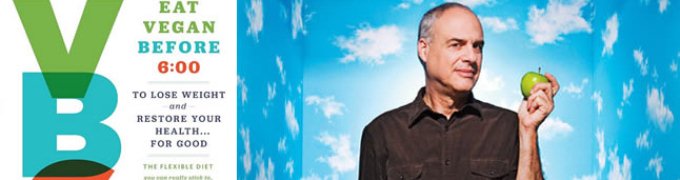
Breaking the SAD Cycle: Mark Bittman’s VB6 (Vegan Before 6:00) Diet Plan

I’m a Bittman fan all the way, but I admit my first reaction to the concept of this book was skepticism.  In my experience working with patients, some of the worst nutrition decisions tend to be made at dinner (after 6pm).  Could being vegan until 6pm and then opening the flood gates to whatever you want to eat really be a good approach?  However, with more thought I became curious (plus I heard there were recipes in the book and Mark Bittman always has great recipes) so I bought a copy.

My curiosity grew as soon as I began reading.  It’s ironic to me that the foreword to this book was written by Dean Ornish, MD.  After all, Dr. Ornish is the doctor whose philosophy when I began reading his literature in the mid-90s was that drastic diet and lifestyle change were the best (and really only) approach to successful outcomes in the long run.  Little changes didn’t provide results quickly enough to maintain a patient’s motivation.  This logic stuck with me through my med school days as I worked with patients and saw firsthand what worked and what didn’t.  Ultimately, I netted out that people are individuals and for some small changes are all that’s possible, for others, jumping in with both feet does the trick.  It seems Dr. Ornish has come back to center as well as he states,

If you eat vegan before dinner and indulge yourself afterward, you’re likely to notice great improvements in your health and wellbeing without feeling deprived.  As you start to feel better and notice how much healthier you are, you’re likely to find yourself in a virtuous cycle in which you may want to do even more.

This book is really a description of Bittman’s personal journey to find the bridge between health and his love of eating.  It’s just the right balance of science, personal testimony and practical DIY tips.  As a doctor whose primary tool is food, I appreciate the time Bittman takes in this book to walk the reader through how we (collectively as a society) have gotten to this place of high-calorie, processed food that is largely absent of nutrition.  Bittman’s description of the Standard American Diet (which he dubs “SAD” through most of the book),

…food that either contains no nutritious value whatsoever—like soda—or foods that are loaded with chemicals and so highly processed that even though they might contain some nutritional value, they bear little resemblance to their origins.

He provides the reader with a 28-day plan to get started and (thankfully for those of us who have all but given up hope of ever having time to cook on a regular basis) he provides a list of “wildcards” (page 120), super quick vegan meals that can either be quickly thrown together at home or found on the go in a restaurant or even in a pinch at a friend’s wedding reception.

To be a healthy vegan, a diverse mix of whole nuts, seeds, grains, vegetables and fruits is essential.  Eating in this way quickly breaks down the confines of the Standard American Diet and provides a crash course in nutrition 101 as a result.  If you’re looking for a way to engage with the power of food as medicine but are not sure you’re ready to swear off your go-to comfort foods, this book is an approachable guide told through a voice that’s done it and is living the benefits eating vegan before 6:00 can provide.

Like this post?

Image by MarkBittman.com

Seven Secret Superfoods

Okay, so these superfoods aren’t really a secret, but there’s a good chance you haven’t heard about them before.  Just because they may not be getting the press that kale, quinoa and acai are getting these days, the following list of food are definitely worth a try…I mean how can you resist the appeal of an umeboshi plum?!

Before we get to the list, however, I want to define what I mean by “superfood”.  The term isn’t regulated and doesn’t have a hard and fast definition.  To me,

A superfood is any food that has a relatively greater amount of health promoting compounds compared to similar types of foods.

With that out of way, check out the following list of seven secret superfoods:

Fennel seeds – Native to the Mediterranean, these seeds have an emerging body of research demonstrating positive benefit for a range of digestive conditions.  Try chewing a small handful of dried fennel seeds after a big meal to help support digestion…they taste like mild black licorice.

Curry powder – A major component of this spice blend is a bright yellow compound called curcumin that comes from the root of the turmeric plant.  Commonly found in traditional Indian cuisine, this compound shows promise for a range of health benefits, probably due to the antioxidant and anti-inflammatory compounds it contains.

Umeboshi plums – A dried and pickled Japanese plum, this fruit is traditionally used to support liver and digestive health.  A little bit goes a long way, just a quarter of one fruit can be sliced and added to rice or even hot tea.  An added bonus of this pickled plum is that it provides the magical “fifth taste”, umami, a flavor most-commonly found in protein-rich animal foods so it can be a great ingredient addition for vegans looking to expand the flavor range of their meals.

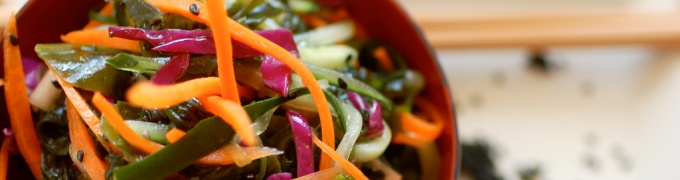
Sea vegetables – A big category of edible plants, a common type of sea vegetable is seaweed, a type of algae that grows on or near the sea floor.  Along with other minerals, many types of seaweed contain iron and vitamin C.  Because vitamin C improves the body’s ability to absorb iron, foods that contain both help to make the iron more bio-available to the body.  In addition to vitamins and minerals, research is uncovering a range of antioxidant and anti-inflammatory compounds in sea vegetables.

Black garlic – This is the same form as plain garlic, but it’s been fermented at high temperature.  The result is a sweeter, milder tasting garlic that can be used in all the same ways as traditional garlic or simply spread on a slice of bread and eaten plain.  Garlic has a strong and established body of research for a host of health conditions, but some of the strongest research is for its cardiovascular benefits, specifically to help manage high cholesterol and blood pressure.

Hemp seeds – Although the seeds come from the same plant that produces marijuana, the effect and benefits of hemp seeds couldn’t be more disconnected from the drug.  The seeds contain a mix of amino acids, fiber, protein, vitamin E and essential fatty acids.  Due to their mild flavor, they can be added to almost anything, from a smoothie to a salad or oatmeal.

Maca powder – A plant native to South America, this root has been cultivated for more than 2000 years and is prepared in many different ways – baked, roasted, even fermented as a drink.  Known as an “adaptogen”, this plant is traditionally recognized and has a small body of modern research suggesting its benefit in supporting feelings of energy and hormonal balance.

Like this post?

Image by sweetbeetandgreenbean

Your Seasonal Guide to Food as Medicine: May Produce

The arrival of May means that no matter where you live, warm days are finally beginning to outnumber cold, daylight is beginning to stretch into the evening hours, and Pinterest boards are likely filling with recipes for barbeques, tasty salads, and Sun Tea.

In the plant world, spring is a time for new growth. Flowers introduce sweet berries, and delicate green shoots grow into edible leaves for salads and sautés. I love this time of year, and as a naturopathic doctor, I especially love the healing properties of fruits and vegetables that are seasonal in May. Here’s my sample guide to what’s in season this month and how each edible plant acts as medicine in the body:

Dandelion leaves – You may be thinking, “Wait, this is a weed not a food, right?” Actually, young dandelion leaves are an edible, slightly bitter addition to any spring salad or sauté and contain a compound, aesculin, which supports the tone of our vessels and can help with issues like swelling, puffiness and poor circulation.

Fava beans – Like large sweet peas, fava beans can be found in pods and are a beautiful rich green color. They are a substantial addition to any recipe and a great vegetarian/vegan option. In addition to providing a spectrum of vitamins and minerals (thiamin, folate, calcium, magnesium and zinc to name just a few), these beans are an excellent source of fiber. That means that in addition to filling you up, they also help to clean you out!

Mint leaves – Plants in the mint family (peppermint and spearmint are two common examples) contain menthol, a compound that provides the cooling quality these leaves are known for. Used in a tea or even rubbed on the skin, mint is used to calm digestion and may be soothing when fresh leaves are crushed and applied to insect bites or itchy skin.

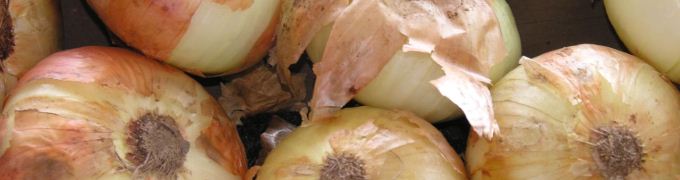
Onions, sweet Vidalia – As medicine, onions are most commonly thought of for their sulfur-containing compounds that have been researched for a range of actions in the body from supporting liver function to inhibiting cancer growth. I love the sweet, mildly spicy flavor of these beautiful onions…a great addition to a vinegar-based potato salad.

Oregano leaves – A staple in most spice racks, dried oregano leaves are a common addition to all kinds of recipes. When in season, fresh leaves can be used to provide a spicy and beautiful pop of flavor and color. Oil of oregano provides a broad spectrum of anti-bacterial, viral and fungal activity and can even be found in some natural insect-repellent recipes.

Like this post?

Image by Old Shoe Woman