All posts tagged food as medicine

Your Seasonal Guide to Food as Medicine: June Produce

In the process of writing seasonal guides to food as medicine for the past few months, I’ve gained a whole new appreciation for the bounty of late spring and summer fruits and vegetables.  The colors!  The variety!  The sweet juicy fruits!  The fruits! (Fruit deserves a second call out).  I’m a bit worried that because I started this process in the spring, I’m in for a rude awakening when winter rolls around.  Starchy root vegetables seem so boring at the moment when compared to the vibrant colors I see at my farmers’ market visits these days.

With so much to choose from, this month required less in the way of searching for material and more in simply choosing which beautiful and powerful plants to highlight.   Here’s a sample of what’s in season in June and how each fruit and vegetable supports the body.

Poblano Peppers – In Central and South America, peppers, and in particular, Poblanos have been a traditional element of the diet for thousands of years.  They’ve long been recognized as a significant source of nutrients such as beta-carotene and other vitamins as well as chlorophyll.  Recent research is now investigating how these compounds may be working together to block mutations in the human body, providing an anti-cancer mechanism.

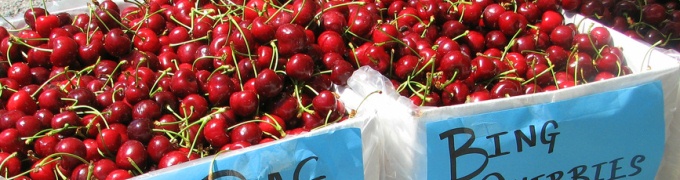
Cherries – One of the highlights from my time living in the Pacific Northwest was the arrival of Bing cherry season.  Although varieties of cherries can be found as far away as Africa, there’s something so amazing about the taste of a sweet, beautiful Bing cherry.  And cherries aren’t just about good taste and looks; research suggests they may have a surprising range of health benefits in the body.  From acting as a medicine for Benign Prostatic Hyperplasia to relieving exercise-induced muscle damage to containing a spectrum of anti-inflammatory and anti-cancer compounds, cherries bring serious medicine to your slice of cherry pie.

Blackberries – Along with traditionally recognized vitamins and antioxidants such as vitamin C and folic acid, blackberries provide anthocyanins, compounds that not only provide this berry’s beautifully rich color but additional antioxidant and astringent activity.  Compounds found in blackberries may help  tonify tissues and small vessels called capillaries, providing benefit for edematous conditions such as lower extremity swelling and varicose veins.  A 2006 study found that a compound in blackberries may also provide anti-cancer protection.

Pineapple – The next time you chop into a pineapple, consider hanging onto the white, center stem.  Bromelain, a digestive enzyme, is found in highest concentrations in this portion of the fruit and has been shown through research dating all the way back to the 1950s to be an effective treatment for inflammatory conditions such as sinusitis and various forms of arthritis.  Emerging research suggests it may be a useful aid to support treatment of pancreatic insufficiency and advanced cancer.

Kale – This leafy green is just one of six modern vegetables derived from the same wild plant, called colewort.  Collard, cabbage, Brussels sprouts, broccoli and cauliflower have also been selectively bred from colewort and it’s for this reason that these vegetables have a similar flavor profile and medicinal qualities.  Kale and its siblings contain a wide range of vitamins, minerals, fiber and most-famously sulfur-containing compounds that in addition to providing a distinct smell have a growing body of research demonstrating anti-cancer and liver-protecting activities.

Like this post?

Image by Wildcat Dunny

Breeding The Medicine Out of “Food as Medicine”

I’m really excited about a book releasing next week titled, Eating on the Wild Side, by Jo Robinson.  Robinson is not a formally trained health professional or PhD but an investigative journalist (BTW…is anyone else noticing that journalists seem to be the new “go-to” source for natural health and food movement expertise?) who’s clearly passionate about the interplay between people, food and the results of what’s happened overtime as we’ve selected plants to meet our cultural preferences.  An excerpt from a New York Times piece she wrote this week:

Each fruit and vegetable in our stores has a unique history of nutrient loss, I’ve discovered, but there are two common themes. Throughout the ages, our farming ancestors have chosen the least bitter plants to grow in their gardens. It is now known that many of the most beneficial phytonutrients have a bitter, sour or astringent taste. Second, early farmers favored plants that were relatively low in fiber and high in sugar, starch and oil. These energy-dense plants were pleasurable to eat and provided the calories needed to fuel a strenuous lifestyle. The more palatable our fruits and vegetables became, however, the less advantageous they were for our health.

And an excerpt from a summary of her book I pulled from Amazon.com:

..400 generations of farmers have unwittingly squandered a host of essential fiber, protein, vitamins, minerals, and antioxidants. New research shows that these losses have made us more vulnerable to our most troubling conditions and diseases–obesity, diabetes, cancer, cardiovascular disease, chronic inflammation, and dementia.

I had the opportunity to sit in on a rather informal chat with Robinson and Dr. Andrew Weil a couple weeks ago and listen as she described her research process behind the book as well as some of the discoveries she found most interesting while compiling information for the text.

In addition to the historical information, which is fascinating and reminds me in many ways of another awesome book, The Botany of Desire, by Michael Pollan, Robinson was full of super practical tips for improving the nutritional content of the food we do have to choose from today.  You can find a list of 12 tips here, but just to give you a taste (pun intended):

  • Tearing Romaine and Iceberg lettuce the day before you eat it quadruples its antioxidant content
  • Storing broccoli wrapped in a plastic bag with tiny pin pricks in it will give you up to 125% more antioxidants than if you had stored the broccoli loosely wrapped or in a tightly sealed bag
  • Thawing frozen berries in the microwave preserves twice as many antioxidants and more vitamin C than thawing them on the counter or inside your refrigerator

Her book is available now for pre-sale and formally releases June 4th.

Like this post?

Image by Suzies Farm

How to Celebrate Salad Month + Memorial Day? Eat Awesome Salads!

Not only is Memorial Day just a few days away but May also happens to be National Salad Month!  I couldn’t have picked a better month to celebrate salads myself, so in honor of beautiful produce everywhere I thought I’d share a few recipes that are not only perfect for a holiday picnic or barbeque, but are packed with phytonutrients.

Springtime Carrot Slaw – This easy vegan take on coleslaw is not only a more colorful play on the traditional version but provides vitamin C, beta-carotene, healthy fat and loads of fiber.  The mix of different cabbages in this recipe also means a broader spectrum of glucosinolate compounds which support detoxification in the liver and may protect against cancer formation.

Strawberry Mint Salad – I cannot get enough strawberries right now, so this simple vegan salad is an excellent excuse to pile my plate high.  The red onions in this recipe contain quercetin, a compound with anti-inflammatory, antioxidant and anti-allergic properties.  The natural oils found in the mint leaves are widely used for digestive conditions such as Irritable Bowel Syndrome (IBS) and indigestion.  Depending on what else you may be eating this holiday weekend, mint may be a nice ingredient to have nearby.

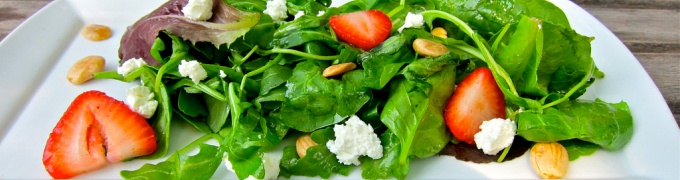
Goat Cheese Creamed Dandelion Greens with Nectarines – I’ve written about the benefits of dandelion greens before, and in this recipe they also provide benefit by acting as a bitter ingredient to stimulate digestive enzymes and support effective digestion.  The pairing of sweet nectarines and goat cheese provides both a great mix of flavors and textures and also makes this salad a bit more substantial as a side-dish.  If you have trouble finding a pure source of stevia, you can always substitute a different sweetener such as maple syrup or ethically sourced honey.

“This nation will remain the land of the free only so long as it is the home of the brave.” -Elmer Davis

Like this post?

Image by the Bombshell Blueprint

Olive Oil, Garlic and Probiotics…Highlights from This Year’s Nutrition and Health Conference

I’m just returning home after having the opportunity to attend one of the most well-known natural health conferences in the country.  The Nutrition and Health Conference is tailored to the conventional medical community and acts as a source for health professionals to hear where research is trending in the natural health and nutrition space.  With approximately 700 attendees (that’s big) this year, it’s a sign that natural health and nutrition is gaining the recognition and credibility it so rightly deserves in our health care system.  The primary organizer, Dr. Andrew Weil, is one of the most-recognized natural health leaders in our country and certainly within the conventional medical community.

I’ve attended the conference for the past few years and use the content as a way to get a sense of what natural health information is hitting the radar of the conventional medical community.  As a specialist in natural health, my visibility to research in this area tends to trend ahead of conventional health providers, so I use the conference as a way to gauge where to meet MDs and conventional RDs in the natural health spectrum for the purposes of information sharing and educating their patients and broader public.

I always walk away from medical conferences feeling like my head is overflowing with information and this conference was no exception.  Some of the information in my notes stood out as relatively simple yet profound in its ability to promote healthy behaviors or expand awareness about nutrition, health and our connection to nature and the planet.  As a result, I’ve created a “top 10” list of sorts.  Hope you find something interesting from the below as I did…

  • A compound unique to olive oil, oleocanthal, has anti-inflammatory activity in the body.  Just one more reason why olive oil is a great option for cooking.  Liberal use (up to ¼ cup per serving) is correlated to improved overall health in some European communities.
  • The enzyme that activates a powerful compound called allicin in garlic is heat-sensitive.  An established body of research suggests allicin may improve cardiovascular health and also demonstrates anti-inflammatory and anti-bacterial/viral activity.  To get around the heat-sensitivity issue, chop fresh garlic and let it sit away from heat for ten minutes before adding it to your stir-fry or other dish.
  • Maybe you’ve heard of combining foods to create a complete vegetarian protein (e.g. beans and rice)?  Well, research now suggests that creating a complete protein at every meal isn’t necessary.  Our bodies have the ability to collect amino acids (the building blocks of protein) from foods throughout the day, so as long as you’re eating a diverse mix of plants, the body can put them together to make sure you’re getting sufficient levels of protein.
  • As a society we tend to get focused on a single nutrient or quality in a food.  Keep in mind that eating a wide range of fruits and vegetables is the most important thing so don’t let yourself get paralyzed by the details.
  • Numerous reasons to consider the benefits of using a high-quality probiotic as a way to influence the type and level of bacteria in the digestive tract:
    • Studies show that antibiotics not only eliminate the presence of healthy bacteria in the digestive tract in the short-term but that repeated use of antibiotics may block the ability of healthy bacteria to return to previous levels, increasing the risk for bad bacteria (e.g. clostridium difficile and others) to take hold.
    • The type of bacteria populating our digestive tracts impacts our bodies’ response to everything from vaccines, allergies and risk for autoimmune disease.
    • The development of obesity and the ability to reverse obesity also seems to be correlated to the type of bacteria populating the digestive tract.
  • Bibliotherapy – A term I heard for the first time at this conference, referring to prescribing books as a treatment for patients.  I love this as it sounds like a naturopathic principle I am very passionate about; doctor as teacher.
  • A book, The China Study.  I haven’t had a chance to read it yet, but had it recommended to me multiple times during the conference and was told that it will open your eyes in a whole new way to links between consumption of animal products and the presence of chronic disease.
  • And finally, a statistic to share how much further we need to come before the role of food as medicine is truly acknowledged.  In 2009, the average medical student in our country received only 19 hours of nutrition education throughout their entire medical training.  Naturopathic medical students easily receive over 100 hours.

Like this post?

Image from Nutrition & Health Conference

Seven Secret Superfoods

Okay, so these superfoods aren’t really a secret, but there’s a good chance you haven’t heard about them before.  Just because they may not be getting the press that kale, quinoa and acai are getting these days, the following list of food are definitely worth a try…I mean how can you resist the appeal of an umeboshi plum?!

Before we get to the list, however, I want to define what I mean by “superfood”.  The term isn’t regulated and doesn’t have a hard and fast definition.  To me,

A superfood is any food that has a relatively greater amount of health promoting compounds compared to similar types of foods.

With that out of way, check out the following list of seven secret superfoods:

Fennel seeds – Native to the Mediterranean, these seeds have an emerging body of research demonstrating positive benefit for a range of digestive conditions.  Try chewing a small handful of dried fennel seeds after a big meal to help support digestion…they taste like mild black licorice.

Curry powder – A major component of this spice blend is a bright yellow compound called curcumin that comes from the root of the turmeric plant.  Commonly found in traditional Indian cuisine, this compound shows promise for a range of health benefits, probably due to the antioxidant and anti-inflammatory compounds it contains.

Umeboshi plums – A dried and pickled Japanese plum, this fruit is traditionally used to support liver and digestive health.  A little bit goes a long way, just a quarter of one fruit can be sliced and added to rice or even hot tea.  An added bonus of this pickled plum is that it provides the magical “fifth taste”, umami, a flavor most-commonly found in protein-rich animal foods so it can be a great ingredient addition for vegans looking to expand the flavor range of their meals.

Sea vegetables – A big category of edible plants, a common type of sea vegetable is seaweed, a type of algae that grows on or near the sea floor.  Along with other minerals, many types of seaweed contain iron and vitamin C.  Because vitamin C improves the body’s ability to absorb iron, foods that contain both help to make the iron more bio-available to the body.  In addition to vitamins and minerals, research is uncovering a range of antioxidant and anti-inflammatory compounds in sea vegetables.

Black garlic – This is the same form as plain garlic, but it’s been fermented at high temperature.  The result is a sweeter, milder tasting garlic that can be used in all the same ways as traditional garlic or simply spread on a slice of bread and eaten plain.  Garlic has a strong and established body of research for a host of health conditions, but some of the strongest research is for its cardiovascular benefits, specifically to help manage high cholesterol and blood pressure.

Hemp seeds – Although the seeds come from the same plant that produces marijuana, the effect and benefits of hemp seeds couldn’t be more disconnected from the drug.  The seeds contain a mix of amino acids, fiber, protein, vitamin E and essential fatty acids.  Due to their mild flavor, they can be added to almost anything, from a smoothie to a salad or oatmeal.

Maca powder – A plant native to South America, this root has been cultivated for more than 2000 years and is prepared in many different ways – baked, roasted, even fermented as a drink.  Known as an “adaptogen”, this plant is traditionally recognized and has a small body of modern research suggesting its benefit in supporting feelings of energy and hormonal balance.

Like this post?

Image by sweetbeetandgreenbean

Your Seasonal Guide to Food as Medicine: May Produce

The arrival of May means that no matter where you live, warm days are finally beginning to outnumber cold, daylight is beginning to stretch into the evening hours, and Pinterest boards are likely filling with recipes for barbeques, tasty salads, and Sun Tea.

In the plant world, spring is a time for new growth. Flowers introduce sweet berries, and delicate green shoots grow into edible leaves for salads and sautés. I love this time of year, and as a naturopathic doctor, I especially love the healing properties of fruits and vegetables that are seasonal in May. Here’s my sample guide to what’s in season this month and how each edible plant acts as medicine in the body:

Dandelion leaves – You may be thinking, “Wait, this is a weed not a food, right?” Actually, young dandelion leaves are an edible, slightly bitter addition to any spring salad or sauté and contain a compound, aesculin, which supports the tone of our vessels and can help with issues like swelling, puffiness and poor circulation.

Fava beans – Like large sweet peas, fava beans can be found in pods and are a beautiful rich green color. They are a substantial addition to any recipe and a great vegetarian/vegan option. In addition to providing a spectrum of vitamins and minerals (thiamin, folate, calcium, magnesium and zinc to name just a few), these beans are an excellent source of fiber. That means that in addition to filling you up, they also help to clean you out!

Mint leaves – Plants in the mint family (peppermint and spearmint are two common examples) contain menthol, a compound that provides the cooling quality these leaves are known for. Used in a tea or even rubbed on the skin, mint is used to calm digestion and may be soothing when fresh leaves are crushed and applied to insect bites or itchy skin.

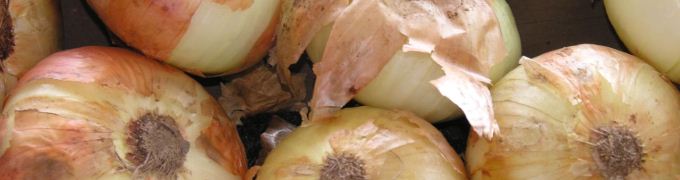
Onions, sweet Vidalia – As medicine, onions are most commonly thought of for their sulfur-containing compounds that have been researched for a range of actions in the body from supporting liver function to inhibiting cancer growth. I love the sweet, mildly spicy flavor of these beautiful onions…a great addition to a vinegar-based potato salad.

Oregano leaves – A staple in most spice racks, dried oregano leaves are a common addition to all kinds of recipes. When in season, fresh leaves can be used to provide a spicy and beautiful pop of flavor and color. Oil of oregano provides a broad spectrum of anti-bacterial, viral and fungal activity and can even be found in some natural insect-repellent recipes.

Like this post?

Image by Old Shoe Woman

Your Seasonal Guide to Food as Medicine: April Produce

When it comes to seasonal foods, spring is definitely my favorite time of year for one important reason, berries.  I love all berries, but especially dark, sweet strawberries…the ones that are big enough that they require at least two bites to get in your mouth.  Beyond just berries, spring is the kick off to a long list of amazing seasonal fruits and vegetables.

As a naturopathic doctor, I’m always thinking about food as medicine.  So, here’s my sample guide to what’s in season this month and how each fruit and veg supports the body.

Arugula – This beautiful bright green leaf is actually part of the Brassica family (think broccoli and Brussels sprouts).  Glucosinolate, a compound found in arugula and other Brassicas, support a specific chemical called cytochrome p450 that plays a major role in the liver’s ability to detoxify our bodies.[1]

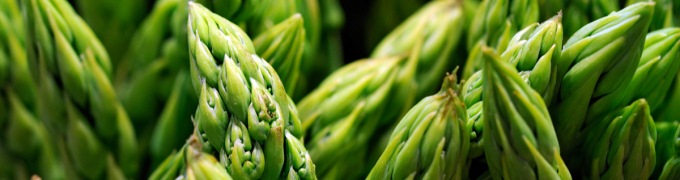
Asparagus – Beyond being a source of vitamins A, C, E, and iron, asparagus also contains a powerful antioxidant called glutathione.  Not only does glutathione work at the sight of cells throughout our bodies to neutralize free radical damage due to stress and chemicals but has a specific affinity for tissues in the liver.  Given that the liver is a primary spot for detoxification in our bodies, giving it some TLC with a boost of glutathione is always a great idea.[2]

Artichoke – Compounds in this plant support liver and bile duct function and may also lower total plasma cholesterol levels and support a more optimal ratio of healthy (HDL) cholesterol to unhealthy (LDL) cholesterol.  Artichokes are a super easy appetizer to make and share, just trim the tips of the flower, steam and serve.[3]

Berries – Although the vitamins and minerals berries provide such as A, C, E, folic acid, selenium and calcium are wonderful, it’s the compounds known as anthocyanins that are getting a lot of attention these days in the scientific community.  Anthocyanins are responsible for providing the brilliant red to purple spectrum of color found in most berries, and in addition to providing pigment, anthocyanins act as antioxidants in the body.  Emerging research suggests benefits in supporting the treatment of everything from colds and flu to cancer.[4]

Navel oranges – If any fruit is famous for containing vitamin C, its oranges.  And while it’s true that the fruit of oranges is a great source for C, the white peel (known as the albedo) around the fruit is worth attention as well.  Flavonoids in the albedo have been researched for their positive role in cancer prevention as well as their ability to support healthy cholesterol levels.  Not only that, but the flavonoids from the peel help the vitamin C in the fruit work better…that Mother Nature, she’s one smart Lady![5]


[1] http://www.ncbi.nlm.nih.gov/pubmed/20833222
[2] http://www.ncbi.nlm.nih.gov/pubmed/21724661
[3] http://www.sciencedirect.com/science/article/pii/S0944711311800279, http://onlinelibrary.wiley.com/doi/10.1002/ptr.3698/abstract;jsessionid=F56F6C50A468740A175ED6F120443C28.d03t02
[4]
http://www.sciencedirect.com/science/article/pii/S1756464613000479
[5] http://www.livestrong.com/article/440499-a-list-of-the-benefits-of-orange-peels/

Like this post?

Join the Global “Eat-In” Happening Today!

162 million Americans have a chronic disease that stems from poor diet and lifestyle choices and 1.5 billion people are now overweight.  Raising just one pound of beef requires 2000 gallons of water and produces 58 times more greenhouse gases than one pound of potatoes.  As surprising as it may seem, what you put on your fork is more impactful to your personal health and the health of the environment than the car you drive.

Imagine the impact we could have on human and planet health if we all chose to purchase only fresh, whole, sustainably-raised, mostly plant-based food.  And imagine if we cooked and ate all the meals made with that beautiful food at home with friends and loved-ones.

Today is Global “Eat-In” Day.  It’s a day to cook and eat real food with family and friends at home for just one day.  Initiated by Dr. Mark Hyman, today is a great opportunity to test how it feels to be mindful about what we eat and take just a little more care with our food choices.

Here’s my meal plan for the day with my family:

Breakfast: Scramble made with homemade tortillas and farmer’s market eggs.  Smoothie made with organic plain yogurt, banana, kale and blueberries.

Snacks: Raw mix of walnuts and almonds.  Fresh berries.

Lunch: Tacos made with homemade tortillas and beans, lettuce, green onions, guacamole and organic plain yogurt

Dinner: Wild salmon tossed with romaine, chopped apples, sunflower seeds and a tahini-based dressing

I hope you’ll join me.  Cheers to the future health of people and planet!

Thank you Civil Eats for the statistics I used at the beginning of this post.

Like this post?

Image by Chris Fritz

Hi, I’m a Qualitarian. Nice to Meet You.

Perhaps the first diet labels stemmed from religion…kosher, for example.  But our evolution in labeling our approach to diet has evolved tremendously, especially in recent years.  Vegan and vegetarian, then lacto-ovo vegetarian (avoids animal products except dairy and eggs), pescetarian (avoids animal products except seafood), flexitarian (eats mostly vegetarian but not always) and now qualitarian.  I feel like all these labels are ripe for a magazine quiz, “Find out Your Diet Type”, right next to a quiz, “Are You Dating the Right Man?”

In all seriousness, I do believe these labels serve a valuable purpose.  They succinctly describe to others what you’re open to eating and they may help the individual using the label to put some structure around their eating goals.

I admit, I like to label myself when it comes to eating and have tested out a variety of labels, lacto-ovo vegetarian, flexitarian and I find myself at times idolizing the vegan label.  However, none of these have ever fit that well.  My guardrails around what I eat are based in how the food is grown, raised, sourced and processed.  I want my tomatoes to be in season and organic, my beef to be pasture raised and grass fed and my coffee to be ethically sourced.  So, imagine my excitement when I came across a new label, qualitarian, in an article by registered dietician, Ashley Koff.  Why, yes!  That’s me!

Qualitarian defined by Koff,

It means, first and foremost, that you choose to be the gatekeeper for what goes into your body. That you don’t feel deprived but rather empowered when you turn down a veggie burger with genetically engineered ingredients or hexane and enjoy one made from organic quinoa and mushrooms or a wild salmon burger or a grass-fed burger. It also means saying no to a ready-to-eat salad of chemically sprayed lettuces in favor of cooking your own organic broccoli (great to start with frozen too). And it means taking pride in being smarter than the front of a package or a commercial. Yes, you are smarter than both of those; yes, you are. You are smarter than the package that tells you what it wants you to know but doesn’t tell you the rest of the story.

As a natural food and health expert, I want to believe these labels are also a symbol for an awakening within our culture.  That flexitarians are not cutting back on meat consumption simply to lower their cholesterol, but because they understand the link between meat production practices and global warming.  That vegetarians are using the label as a way to increase consumption of fresh produce and decrease consumption of processed foods.

So, whatever you may be, a vegan or even an omnivore contemplating a trial as a pescetarian, I invite you test out a diet label.  Chances are, wherever you land it will provide an opportunity for you and those around you to question what you believe about food and be more thoughtful about the decisions you make.

Like this post?

Image by Laissez Fare

How to Make a Super Smoothie

I really love smoothies.  Not only do they taste great, but they are a fabulous way to pack in serious nutrition.  I regularly prescribed medical smoothies for my cancer patients while in private practice to minimize side-effects from chemotherapy and radiation and I personally used smoothies before and during both of my pregnancies to get my body ready and to make sure I was providing all the extra nutrients I needed to grow beautiful healthy babies.

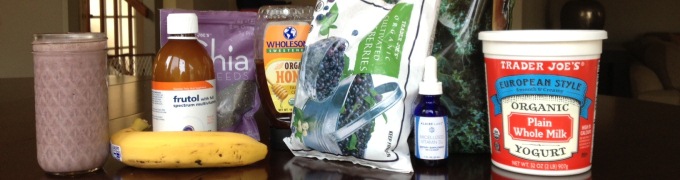
My basic smoothie recipe is the following:

  • ½ banana
  • 1 cup whole fat, plain yogurt
  • 1 cup frozen blueberries
  • Water to desired consistency

Smoothie text pic

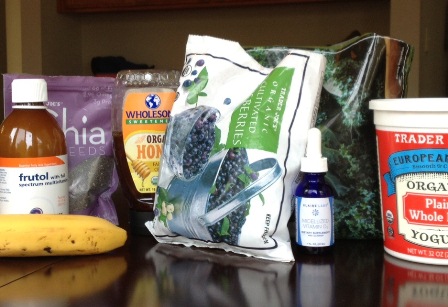
Other things I often add:

  • Frozen kale – you can either buy kale this way or cook, puree and drop into ice cube trays to use as you need them
  • Chia seeds
  • Fair trade honey or agave syrup
  • Liquid fish oil – I like Frutol by Pharmax LLC
  • Vitamin D drops
  • Powdered supplements such as multivitamins or liver support herbs – for both I use a brand called Karuna

If you’re not big on pills, smoothies can be a great way to deliver your medicine as it’s easy to mask the flavor. They are also great to have for breakfast.  I’ll often get my ingredients ready the night before and store in the fridge, then blend right before I leave so I can drink it on my way into the office.  A smoothie plus a hard-boiled egg or a slice of whole grain toast with nut butter spread is a complete breakfast full of all the things you need to give you energy and brain power!

If you’re vegan or just avoiding dairy, try using ½ an avocado instead of yogurt.  Avocados provide a nice creamy texture and are loaded with healthy fat (Please don’t be scared of fat.  It’s a good thing!).  Also, it’s important that all the ingredients (especially the dairy) be organic certified or sourced from a farm that avoided conventional pesticide practices.  Obviously, any fruit/veg is better than none at all, but clean versions are even better.

Starting my day off with a smoothie really makes a big difference in how I feel overall at the end of the day.  I know no matter what, I’ve given my body a great boost of fiber, antioxidants, dark green veggies and specific nutrients from my dietary supplements.

Like this post?