All posts in Uncategorized

Jimmy Kimmel Asks “What is Gluten?”

When it comes to nutrition and diets, our society is so reductionistic about what’s “good” and what’s “bad” that we sometimes lose context for the reasons and science behind our choices. Gluten is a classic example of this, and Jimmy Kimmel does a hilarious job of pointing this out in a recent video where he randomly asks people who subscribe to a gluten-free diet to define gluten.

To save you the same awkward fate, gluten is:

A general name for the proteins found in wheat (durum, emmer, spelt, farina, farro, KAMUT® khorasan wheat and einkorn), rye, barley and triticale.

Enjoy!

My Personal Journey into Meditation – Part Two

Meditation is not just an activity for yogis seeking spiritual enlightenment.  As I mentioned in Part 1 of this post, the science on the benefits of meditation is strong and growing with the practice showing promise across a range of both physical and mental/emotional disease states.  For me personally, I’m entering the world of meditation in the hope it can be a tool to help me find peace within my hectic, and sometimes chaotic, life.

I’ve just returned from a five-day meditation retreat at a Buddhist monastery founded by Thích Nhất Hạnh.  Thầy, as he’s known to the community that follows him, is a Buddhist monk originally from Vietnam who came to the United States in the 1960s and is largely recognized as a world leader in the peace movement (he was nominated by Martin Luther King, Jr. for a Nobel Peace Prize in 1967).  His practice pulls from a variety of sources within the Buddhist tradition as well as from Zen teachings and Western psychology theory.  In terms of meditation, his approach is summed up as “mindfulness meditation” which is basically just what it sounds like it would be.

Our days at the retreat were pretty scheduled and looked something like this:

5.30a – Wake up with group exercise followed by walking meditation to the Big Hall
6.30a – Sitting meditation for 45 minutes followed by more exercise
7.45a – Silent breakfast with eating meditation
11a – A Dharma Talk given to the group by one of the resident monks or nuns*
12.30p – Silent lunch with eating meditation
2p – Deep meditation in the Big Hall (also known as “snore meditation”, this quickly became a personal highlight)
3p – Breakout session with smaller groups led by a monk or nun to discuss the practice and related subjects
5.30p – Dinner with eating meditation
7.30p – Sitting meditation in the Big Hall for 45 minute followed by “Nobel Silence” which lasted until after breakfast the next morning

It turns out “mindfulness meditation” can manifest in many forms and the practice of meditation can take place outside of sitting silently, eyes closed, in Lotus position.  This form of meditation requires clearing your mind and bringing it to focus on the present moment.  For example, at the beginning of each meal we were encouraged to eat in silence.  Prior to beginning to eat, we sat with our food in order to appreciate all the hard work by numerous people and the planet that went into creating the ingredients and presenting it as our meal.  When we began eating, we were encouraged to eat slowly, taking the time to really experience the taste and texture of our food, placing our utensils down between bites and chewing thoroughly.  Although it may sound simple, in my experience, it was profound.  Especially with my background in food and medicine, taking the time to truly appreciate what I was eating was a powerful exercise.

Now that I’m back I’ve noticed that I have a greater ability to focus…during a conversation with a colleague or to the lyrics in the music I listened to while jogging this morning.  But more than that, I feel calm.  Really calm in a way I haven’t felt for a long time.  It feels wonderful.

My plan now is to try and use some of the time I traditionally reserve for TV to sneak upstairs and practice silent sitting meditation for 20 minutes Monday-Friday.  I’m also planning to look for a Sangha, a meditation community, in my area to join as a way to stay connected to other people who are following a similar path.  Turns out, I’m also thinking a bit about the practice of Buddhism in general since the retreat…not sure what that means yet.

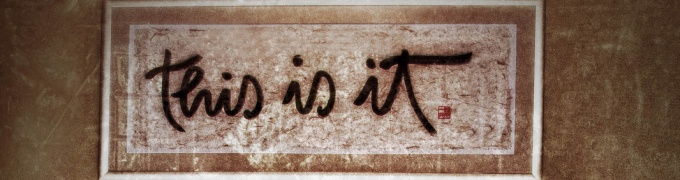
Inside the Big Hall at the altar was a beautifully painted sign that said “This is it”.  That sign is definitely the most profound visual memory I have from my time at the retreat as its message is so incredibly simple and yet, to me, so true.  This is our life.  The time is now.  This is it.

*During one of the Dharma Talks, a monk referred to a piece in the New York Times about the “Busy Trap”.  It’s a great read about how we create busyness in our lives and the value the author places on his moments of idleness.

Like this post?

Image by quest4pce

American Eggs Illegal in British Supermarkets?

The USDA requires egg producers to wash eggs and keep them cool…seems like a good thing, right?  Maybe not.  As Mother Nature would have it (surprise, surprise) an egg shell kept completely dry and un-sanitized retains a natural barrier that protects the contents inside.  So much so that eggs treated in this way do not even require refrigeration and can remain at room temperature for weeks.

This fascinating article, written by Nadia Arumugam, Contributor to Forbes, compares the egg treatment standards between the U.S. and E.U. and highlights some incredible differences.  I always find it interesting when in our attempts to protect we ultimately over-look the inherent intelligence of nature.

Personally, this just further confirms my belief that farmer’s market eggs are better.   The dark yellow yolks, the firmness of the egg when it drops into the pan, the rich flavor…Next time I go to my local market I’m definitely going to ask my egg vendor about his handling practices to see if I can get myself some “dirty” eggs!

Like this post?

Image by Perfectly Natural

Is it Okay to Add Aspartame to Milk? Let’s All Hope Not!

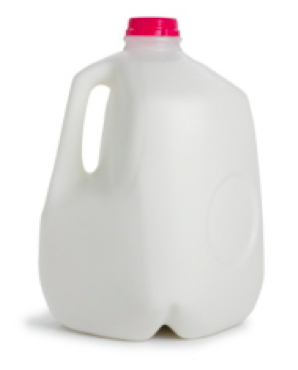
Screen Shot 2013-03-05 at 1.23.17 PMI was sad to see news last week that the milk industry has petitioned the FDA to approve the use of aspartame, an artificial, chemically-created sweetener also known as NutraSweet and Equal, as a way to create a lower-calorie milk. You can find the article here.

The natural products industry is under tremendous pressure to innovate and create new products, and the milk industry is by no means immune. Another likely factor at play in this news is our society’s continued desire for products that provide it all – great flavor, great nutrition, zero calories and, of course, cheap. An artificially-sweetened, low-calorie milk is such a great example of how just because something can technically be done it doesn’t necessarily mean it’s the right thing to do.

Milk is an American symbol of what is good and wholesome in our diets. As a mother, I’ve been told repeatedly to give milk to my children (not just for the calcium but also as a liquid-dense source of calories). It is an excellent addition to the diet for many of us due to the protein, calcium and vitamin D it provides. If you’re open to drinking raw milk, the benefits multiply exponentially.

It’s because milk is so wholesome and because so many of us rely on milk to keep ourselves and our families healthy, that adding an artificial sweetener to it is especially troubling. Like all natural things, milk was beautifully created with just the right amount of calories and sugar (lactose). If we need a low calorie drink, let’s all turn to a nice big glass of pure water and save our milk for a nicely (and naturally) packaged snack.

Like this post?

Image by ShardsOfBlue

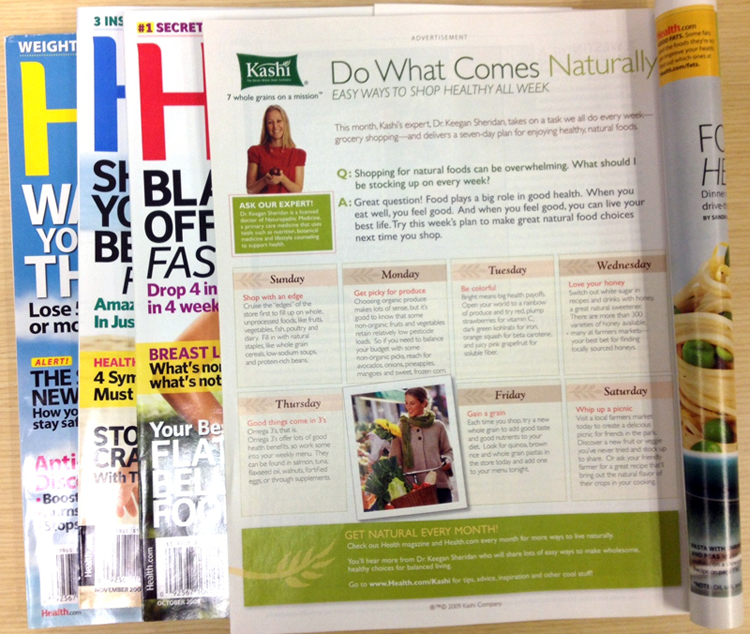
“Ask the Expert” Partnership with Health Magazine and Kashi

1-Health-Magazine-Ask-the-Expert

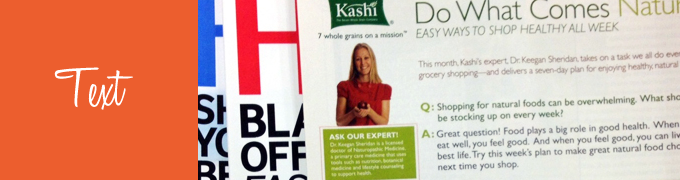
I love when great brands unite (and I get to be in the middle of it!). Just one such thing happened when I had the chance to do a year-long “Ask the Expert” column with Kashi and Health Magazine. We gave each month a theme, such as “easy ways to shop healthy all week” or “easy ways to live naturally at work”. The general goal of the column was to provide tips for small changes that can add up to having a big impact on your health. Not only was it fun to have such a great platform to share natural food and lifestyle tips, but also awesome to represent and bring exposure to the naturopathic medical profession!

Like this post?