All posts in Blog

Whole Foods Market and Monsanto – Really, People?

Since the beginning of the year, Whole Foods Market has been dealing with a set of rumors all relating to a relationship with Monsanto. One rumor is that that they have been purchased by the multinational agriculture biotech company. Another is that the two companies are at least cavorting together to support the deregulation of genetically modified organism (GMO) crops such as alfalfa in the United States. My immediate reaction to these rumors is to laugh. I mean, really. Really? Would anyone who knows anything about these companies actually believe such nonsense?

But here’s the thing that really irritates me about these rumors…Whole Foods Market is STILL dealing with them, more than two months after publicly addressing and dismissing them on their blog and, more importantly, after making one of the most profound public commitments to addressing the GMO labeling issue a retailer has ever made.

I’ve seen this type of attack on a major brand play out multiple times in past years and it really bothers me. Despite what your feelings may be of large companies such as Whole Foods Market or even Wal-Mart, they have one thing that is undeniable – power to change the system. When, in 2006, Wal-Mart announced a commitment to sell more organic food, awareness and availability of organic expanded dramatically. Similarly, when Whole Foods Market announced this past March that beginning in 2018 they will require products in their stores to label if they contain GMO, they triggered a ripple effect in the food community that will result in more organic farmland, more organic food options and maybe even federal action on the issue of GMO labeling.

In reality, the people and groups behind the Whole Foods Market and Monsanto rumors are probably very small in number and do not impact the vast majority of those who care about natural and organic food options.  However, a small group, if organized, can demand a lot of time and attention from the company/brand to manage. What if, instead of forcing Whole Foods Market to spend time strategizing about how best to squelch nonsense rumors, they were given the opportunity to focus on the best ways to support healthy, sustainable food options for their consumers and our country?

Like this post?

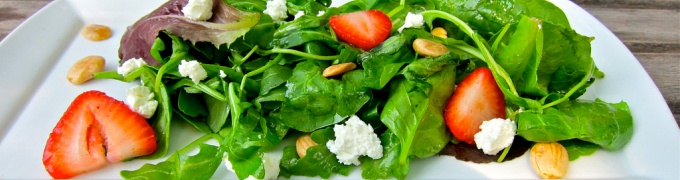
Image from Whole Foods Market Blog

Grains of Change with Kashi and the Sundance Channel

Going through my archives last night, I came upon this commercial I had the opportunity to do with Kashi and the Sundance Channel a few years ago.  Grains of Change was a Kashi and Sundance series that profiled seven leaders in the natural food community across the U.S. who are dedicated to promoting healthy lifestyles and greater connections to the natural world.  As Kashi’s natural food and lifestyle expert, I was honored to introduce this series and these individuals.

Like this post?

Your Seasonal Guide to Food as Medicine: April Produce

When it comes to seasonal foods, spring is definitely my favorite time of year for one important reason, berries.  I love all berries, but especially dark, sweet strawberries…the ones that are big enough that they require at least two bites to get in your mouth.  Beyond just berries, spring is the kick off to a long list of amazing seasonal fruits and vegetables.

As a naturopathic doctor, I’m always thinking about food as medicine.  So, here’s my sample guide to what’s in season this month and how each fruit and veg supports the body.

Arugula – This beautiful bright green leaf is actually part of the Brassica family (think broccoli and Brussels sprouts).  Glucosinolate, a compound found in arugula and other Brassicas, support a specific chemical called cytochrome p450 that plays a major role in the liver’s ability to detoxify our bodies.[1]

Asparagus – Beyond being a source of vitamins A, C, E, and iron, asparagus also contains a powerful antioxidant called glutathione.  Not only does glutathione work at the sight of cells throughout our bodies to neutralize free radical damage due to stress and chemicals but has a specific affinity for tissues in the liver.  Given that the liver is a primary spot for detoxification in our bodies, giving it some TLC with a boost of glutathione is always a great idea.[2]

Artichoke – Compounds in this plant support liver and bile duct function and may also lower total plasma cholesterol levels and support a more optimal ratio of healthy (HDL) cholesterol to unhealthy (LDL) cholesterol.  Artichokes are a super easy appetizer to make and share, just trim the tips of the flower, steam and serve.[3]

Berries – Although the vitamins and minerals berries provide such as A, C, E, folic acid, selenium and calcium are wonderful, it’s the compounds known as anthocyanins that are getting a lot of attention these days in the scientific community.  Anthocyanins are responsible for providing the brilliant red to purple spectrum of color found in most berries, and in addition to providing pigment, anthocyanins act as antioxidants in the body.  Emerging research suggests benefits in supporting the treatment of everything from colds and flu to cancer.[4]

Navel oranges – If any fruit is famous for containing vitamin C, its oranges.  And while it’s true that the fruit of oranges is a great source for C, the white peel (known as the albedo) around the fruit is worth attention as well.  Flavonoids in the albedo have been researched for their positive role in cancer prevention as well as their ability to support healthy cholesterol levels.  Not only that, but the flavonoids from the peel help the vitamin C in the fruit work better…that Mother Nature, she’s one smart Lady![5]


[1] http://www.ncbi.nlm.nih.gov/pubmed/20833222
[2] http://www.ncbi.nlm.nih.gov/pubmed/21724661
[3] http://www.sciencedirect.com/science/article/pii/S0944711311800279, http://onlinelibrary.wiley.com/doi/10.1002/ptr.3698/abstract;jsessionid=F56F6C50A468740A175ED6F120443C28.d03t02
[4]
http://www.sciencedirect.com/science/article/pii/S1756464613000479
[5] http://www.livestrong.com/article/440499-a-list-of-the-benefits-of-orange-peels/

Like this post?

Join the Global “Eat-In” Happening Today!

162 million Americans have a chronic disease that stems from poor diet and lifestyle choices and 1.5 billion people are now overweight.  Raising just one pound of beef requires 2000 gallons of water and produces 58 times more greenhouse gases than one pound of potatoes.  As surprising as it may seem, what you put on your fork is more impactful to your personal health and the health of the environment than the car you drive.

Imagine the impact we could have on human and planet health if we all chose to purchase only fresh, whole, sustainably-raised, mostly plant-based food.  And imagine if we cooked and ate all the meals made with that beautiful food at home with friends and loved-ones.

Today is Global “Eat-In” Day.  It’s a day to cook and eat real food with family and friends at home for just one day.  Initiated by Dr. Mark Hyman, today is a great opportunity to test how it feels to be mindful about what we eat and take just a little more care with our food choices.

Here’s my meal plan for the day with my family:

Breakfast: Scramble made with homemade tortillas and farmer’s market eggs.  Smoothie made with organic plain yogurt, banana, kale and blueberries.

Snacks: Raw mix of walnuts and almonds.  Fresh berries.

Lunch: Tacos made with homemade tortillas and beans, lettuce, green onions, guacamole and organic plain yogurt

Dinner: Wild salmon tossed with romaine, chopped apples, sunflower seeds and a tahini-based dressing

I hope you’ll join me.  Cheers to the future health of people and planet!

Thank you Civil Eats for the statistics I used at the beginning of this post.

Like this post?

Image by Chris Fritz

Hi, I’m a Qualitarian. Nice to Meet You.

Perhaps the first diet labels stemmed from religion…kosher, for example.  But our evolution in labeling our approach to diet has evolved tremendously, especially in recent years.  Vegan and vegetarian, then lacto-ovo vegetarian (avoids animal products except dairy and eggs), pescetarian (avoids animal products except seafood), flexitarian (eats mostly vegetarian but not always) and now qualitarian.  I feel like all these labels are ripe for a magazine quiz, “Find out Your Diet Type”, right next to a quiz, “Are You Dating the Right Man?”

In all seriousness, I do believe these labels serve a valuable purpose.  They succinctly describe to others what you’re open to eating and they may help the individual using the label to put some structure around their eating goals.

I admit, I like to label myself when it comes to eating and have tested out a variety of labels, lacto-ovo vegetarian, flexitarian and I find myself at times idolizing the vegan label.  However, none of these have ever fit that well.  My guardrails around what I eat are based in how the food is grown, raised, sourced and processed.  I want my tomatoes to be in season and organic, my beef to be pasture raised and grass fed and my coffee to be ethically sourced.  So, imagine my excitement when I came across a new label, qualitarian, in an article by registered dietician, Ashley Koff.  Why, yes!  That’s me!

Qualitarian defined by Koff,

It means, first and foremost, that you choose to be the gatekeeper for what goes into your body. That you don’t feel deprived but rather empowered when you turn down a veggie burger with genetically engineered ingredients or hexane and enjoy one made from organic quinoa and mushrooms or a wild salmon burger or a grass-fed burger. It also means saying no to a ready-to-eat salad of chemically sprayed lettuces in favor of cooking your own organic broccoli (great to start with frozen too). And it means taking pride in being smarter than the front of a package or a commercial. Yes, you are smarter than both of those; yes, you are. You are smarter than the package that tells you what it wants you to know but doesn’t tell you the rest of the story.

As a natural food and health expert, I want to believe these labels are also a symbol for an awakening within our culture.  That flexitarians are not cutting back on meat consumption simply to lower their cholesterol, but because they understand the link between meat production practices and global warming.  That vegetarians are using the label as a way to increase consumption of fresh produce and decrease consumption of processed foods.

So, whatever you may be, a vegan or even an omnivore contemplating a trial as a pescetarian, I invite you test out a diet label.  Chances are, wherever you land it will provide an opportunity for you and those around you to question what you believe about food and be more thoughtful about the decisions you make.

Like this post?

Image by Laissez Fare

Health Status of Mother Earth? Look No Further Than the Honeybee.

For many of us, our understanding of the role honeybees play within our ecosystem is little at best, completely unknown at worst.  If you live in a city, you probably don’t even see them that often, and if you do they are a pest, we shoo them away for fear of being stung.

The truth about bees is that they are integral to the health of our planet and especially important when it comes to our global food supply.  As Marion Nestle pointed out in a recent post on this issue, bees pollinate 71 of the 100 crops that provide 90 percent of the world’s food.  Please read that stat again…it’s stunning.

Briefly, here’s a summary of the state of affairs for bees:

  • In the 1970s there were approximately seven million hives in the United States, today there are just two million (that’s about 250 billon fewer bees)
  • In some cases there is up to a 90% death rate within hives and total colony loss during winter months is up to 30% (from 10% in previous years)

The cause behind these rapid declines is not formally known although factors such as changes in diet (they are sometimes fed high fructose corn syrup) and exposure to pesticides such as neonicotinoids are suspected.  The New York Times just ran a piece this morning that summarizes some of this debate.

Another debated topic is conventional handling practices such as the smoking techniques beekeepers use to calm hives.  Research has demonstrated that this technique can hinder bees’ sense of scent (they use scent to navigate) for up to ten days, leaving them disoriented and disabled.

If the information I’m sharing here is new to you, I hope that you are concerned.  I definitely am.

If you are interested in learning more as well as connecting to institutions who are advocating for more protection and research for honeybees, check out the following links:

A sincere thank you to the Rodale Institute, who provided much of the background information for this post.

Like this post?

Image by wondermac

Sleep Like a Baby – Six Natural Tips to Optimize Sleep

Our bodies use sleep time to repair damaged tissues, rebuild our immune systems and process all the stressors from the previous day.  In my experience from working with patients in private practice, the single treatment of improving a patient’s sleep patterns can have a profound impact on their overall health status, regardless of their illness.  Bottom line – productive, sufficient sleep is really, really important and most of us sabotage ourselves due to poor sleep hygiene.

I define optimal sleep as the following – falling asleep within ten minutes of lying down, sleeping through the night without waking and waking the next morning feeling rested.

If you’re not experiencing optimal sleep, the trick to getting there may be found in some simple behavior and lifestyle changes.

My basic recommendations (the more of these you can incorporate the better):

  1. Simplify your sleeping space.  The only thing you should be doing in your bedroom is sleeping and having sex.  Paperwork, television, food, clutter…these are all things that do not belong in the bedroom.  Your sleeping space should make you feel calm and relaxed.
  2. Make sure your bedroom is dark and quiet.  Cover windows with blackout shades; add white noise at night if you have outside noise to deal with.
  3. Try to avoid eating right before bed.  Ideally, give yourself a couple hours of no solid food before bedtime.  Giving your body a few hours of digestion time prior to sleep will allow your system to shift into a deeper state of relaxation.  An added side-effect of this tip is that it may also improve your digestion the next morning.
  4. Disengage from all stimuli 30 minutes prior to bedtime.  So, turn off the TV, shut down your computer and phone.  Dim the lights, sit quietly and do something relaxing like read a book.

If you need extra support during the night, here are some tools to consider:

  1. Keep a notebook next to your bed.  If you find that you wake with a list of worries or “to-dos”, take a moment to write them down and get them out of your head so you can deal with them in the morning when you can be productive.
  2. If you are able to fall asleep without trouble but often wake and have trouble getting back to sleep, try the following: Find an essential oil scent that is appealing to you but is one you do not smell at other times of the day (so, e.g., lavender is probably not a good choice as it’s found in many soap scents, etc).  Before you go to bed at night, apply a small amount behind your ears.  Do this for a few nights in a row to establish a link between this scent and the feeling of sleepiness.  Once this connection is established, you can begin using the scent in the night if you wake up and have trouble returning to sleep.  Apply the oil again behind the ears as a trigger to your brain for feeling sleepy.  (This tip can also be useful when traveling to different time zones to speed recovery from jet lag.)

A variety of natural products such as melatonin, chamomile flower and valerian root can also be used as temporary treatments to help establish new sleeping patters.  With any product, there are always risks, so it’s best to work with a licensed practitioner, such as a naturopathic doctor, who is trained in using medicines like these.

Here’s a simple step-by-step bedtime ritual I found from The Healthy Entrepreneur that may also be a nice guide to check out.

Sweet dreams!

Like this post?

Image by trevorrussell

My Personal Journey into Meditation – Part One

I’m heading into a five day meditation retreat this afternoon.  Beyond my focus on Ujjayi breathing during yoga practice, I can’t say I’ve ever really meditated.  I have to confess that I’m pretty anxious about it (to the point of having a stress dream the other night) which in some ways feels counter-intuitive to the whole point of meditation…however, I also have this feeling deep in my gut that meditation is a powerful missing link in my health journey and that now is the right time to explore what this practice has to offer.   I’m choosing to trust my gut on this one.

The science behind the benefits of meditation is convincing.  Using meditation to treat everything from the symptoms of heart disease to post-traumatic stress disorder has been published.  There’s even science to suggest it delays the thinning of the frontal cortex of the brain typically seen as we age.  If you follow Oprah or Deepak Chopra, you may be aware of the 21-Day Meditation Challenge they are currently leading which has over 600,000 participants.  My point – meditation isn’t just for yogi gurus, meditation is powerful natural medicine.

For me personally, I hope this journey into meditation will provide two things: 1) an ability to maintain calm and clarity amidst the chaos that is my life (full-time job, two small children, etc), and 2) a greater ability to appreciate the beauty of the present moment, letting go of my focus on worries about the past and fears about the future.

You could say I’ve been stuck in a heavy contemplation phase for months now about committing to meditation.  Books I’ve read (and then often stopped once I get to the part where they want me to commit to daily practice) include, Full Catastrophe Living and Buddhism for Mothers.

I think my biggest struggle is in making the commitment to daily practice.  Where do I find the time?  How can I truly relax and focus when I know my kids could barge in on me at any moment?  How do I stop myself from falling asleep while practicing (which is a realistic concern to a sleep-deprived mom)?  These are the questions and excuses I tell myself.

So, my solution to get “unstuck” from contemplation is to jump in with both feet and head to a five day retreat.  No cell phones, computers or makeup allowed (the last requirement is my own).

I’ll look forward to reporting back on my experience next week.  Namaste!

Like this post?

Image by MeditationMusic.net

How to Make a Super Smoothie

I really love smoothies.  Not only do they taste great, but they are a fabulous way to pack in serious nutrition.  I regularly prescribed medical smoothies for my cancer patients while in private practice to minimize side-effects from chemotherapy and radiation and I personally used smoothies before and during both of my pregnancies to get my body ready and to make sure I was providing all the extra nutrients I needed to grow beautiful healthy babies.

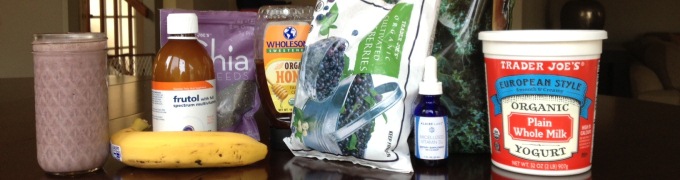
My basic smoothie recipe is the following:

  • ½ banana
  • 1 cup whole fat, plain yogurt
  • 1 cup frozen blueberries
  • Water to desired consistency

Smoothie text pic

Other things I often add:

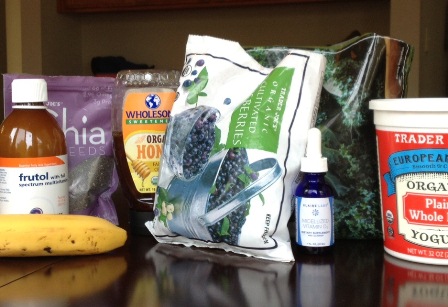
  • Frozen kale – you can either buy kale this way or cook, puree and drop into ice cube trays to use as you need them
  • Chia seeds
  • Fair trade honey or agave syrup
  • Liquid fish oil – I like Frutol by Pharmax LLC
  • Vitamin D drops
  • Powdered supplements such as multivitamins or liver support herbs – for both I use a brand called Karuna

If you’re not big on pills, smoothies can be a great way to deliver your medicine as it’s easy to mask the flavor. They are also great to have for breakfast.  I’ll often get my ingredients ready the night before and store in the fridge, then blend right before I leave so I can drink it on my way into the office.  A smoothie plus a hard-boiled egg or a slice of whole grain toast with nut butter spread is a complete breakfast full of all the things you need to give you energy and brain power!

If you’re vegan or just avoiding dairy, try using ½ an avocado instead of yogurt.  Avocados provide a nice creamy texture and are loaded with healthy fat (Please don’t be scared of fat.  It’s a good thing!).  Also, it’s important that all the ingredients (especially the dairy) be organic certified or sourced from a farm that avoided conventional pesticide practices.  Obviously, any fruit/veg is better than none at all, but clean versions are even better.

Starting my day off with a smoothie really makes a big difference in how I feel overall at the end of the day.  I know no matter what, I’ve given my body a great boost of fiber, antioxidants, dark green veggies and specific nutrients from my dietary supplements.

Like this post?

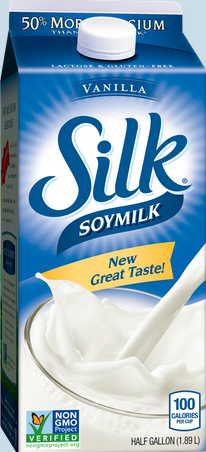
Silk Opts out of “Natural”

7 silk opts out of soy imageThe claim “natural” has exploded over the last ten years on everything from potato chips to t-shirt fabric to mattress bedding.  So, it’s especially interesting that Silk, a leading manufacturer of soy and other non-dairy beverages, made a recent announcement that they have decided to remove this claim from their products.

The term “natural” is messy for sure.  Largely left open for interpretation due to a lack of regulation by the Food and Drug Administration, what it means in terms of a standard is left up to the companies creating and marketing the products.  Responsibility ultimately falls to the consumer, to do their own research to determine which brands fit with their expectations for what a natural product should be.

Some of you may remember that back in early 2009, Silk received quite a bit of negative press for silently making a switch to non-organic soy beans for their soymilk.  It is a misstep they seem to have recovered from, but I have to assume the experience taught a valuable lesson on transparency and had a major influence on their decision to so publically detail this decision and the reasoning behind it.

Personally, I think it was a good move.  Although “natural” is a powerful term and one I am personally quite connected to, I am bothered by its lack of clarity and wish for claims that more clearly guide positive choices for consumers.

For now, “USDA Organic” and “Non-GMO Project Verified” are some of the best ways to credibly communicate clean food.  Until the FDA or a reputable non-governmental organization steps in to regulate the term, “natural” will continue to be vague.

Like this post?

Thank you, Silk, for the use of your images.